


When customers get asked at check-out if they want a receipt, most folks say, "No thanks." People view receipts as just clutter, but for a business, receipts are your armor when an audit arrives.
Why? Because receipts help keep your books straight, protect your tax deductions, and provide the hard data you need to make smart business decisions.
No, it isn’t fun wading through different slips and trying to get them into some semblance of order.
However, maintaining a clean record is non-negotiable for staying compliant. This guide will show you how to transform the paper chase into a streamlined, automated process that saves you time, money, and headaches.
What is a Receipt?
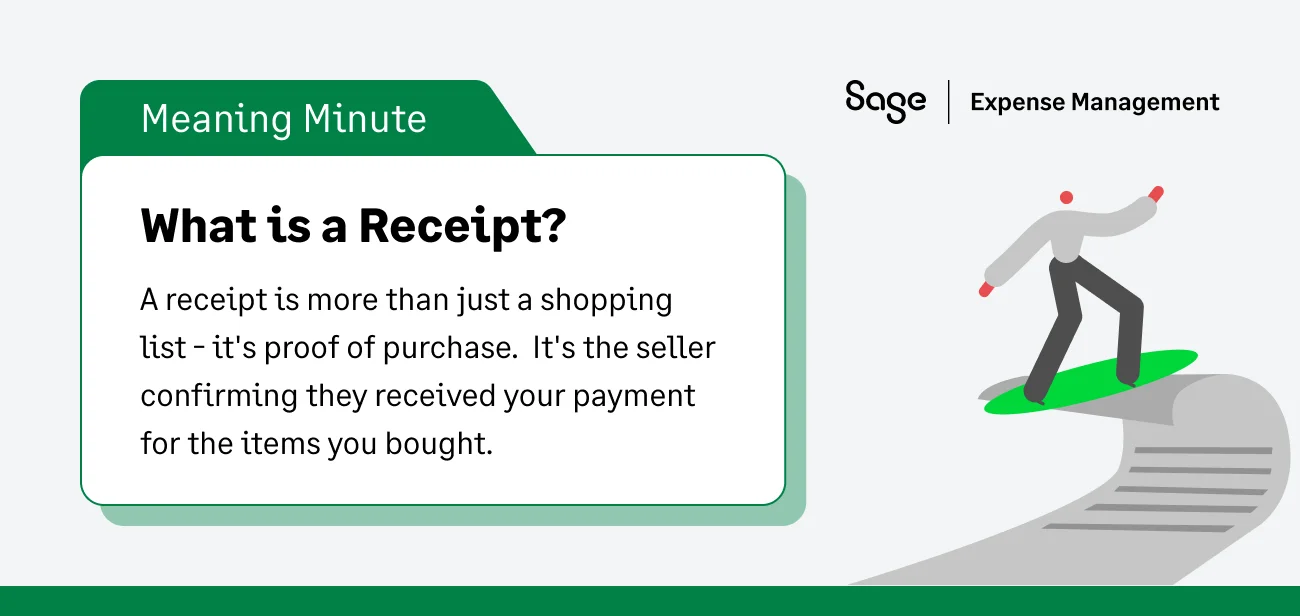
A receipt is a document that serves as proof of a financial transaction. For an expense to be valid for tax purposes, the IRS requires that the record include four key elements:
- The amount of the expense.
- The date and place where the expense occurred.
- The business purpose of the expense.
- A clear description of the item or service purchased.
Why Should You Keep Track of Business Receipts?
Maintaining accurate records is a crucial aspect of building, sustaining, and growing a business.
Keeping a good business record
Receipts are essential for spending visibility. They help you monitor your progress by answering the following:
- Are you spending more than you projected?
- Are actual costs lower or higher than expected?
- Is your profit margin being squeezed?
- Are you earning, or just staying afloat?
Keeping receipts can help you answer these questions by providing you with actual figures you can work with.
Preparing for tax returns
Receipts are proof of deductible expenses when you file your tax returns. In case of an audit, these receipts are your only accepted proof to substantiate your claims.
Preparing financial statements
Receipts are essential for preparing accurate financial statements for your business. Factual and accurate financial statements are vital when dealing with creditors or applying for a business loan, as they show your business is transparent and in order.
Proof of sale
Keeping receipts means you have a record of an actual transaction that occurred. If there is dissatisfaction with the service received, that receipt goes a long way in proving that:
- There was indeed a sale and
- It was between the two parties involved.
Should any refund or exchange of any kind be required, the amount must be reconciled with the actual receipt.
How to Keep Track of Receipts for Taxes?
You can either stick to the traditional methods of managing receipts or upgrade to a modern, digital system.
1. Organize your paper receipts properly
If you prefer physical copies, organization is mandatory:
- Organize as you receive them: Keep separate envelopes for personal and business receipts to save a headache come tax season.
- Note the purpose: Write the client name or project on the back immediately. A restaurant receipt for a "client lunch" is much easier to recall on Tuesday than it is three weeks later.
- Use binders and folders: Categorize by month and expense type (Travel, Supplies, etc.).

2. Digitize your receipts
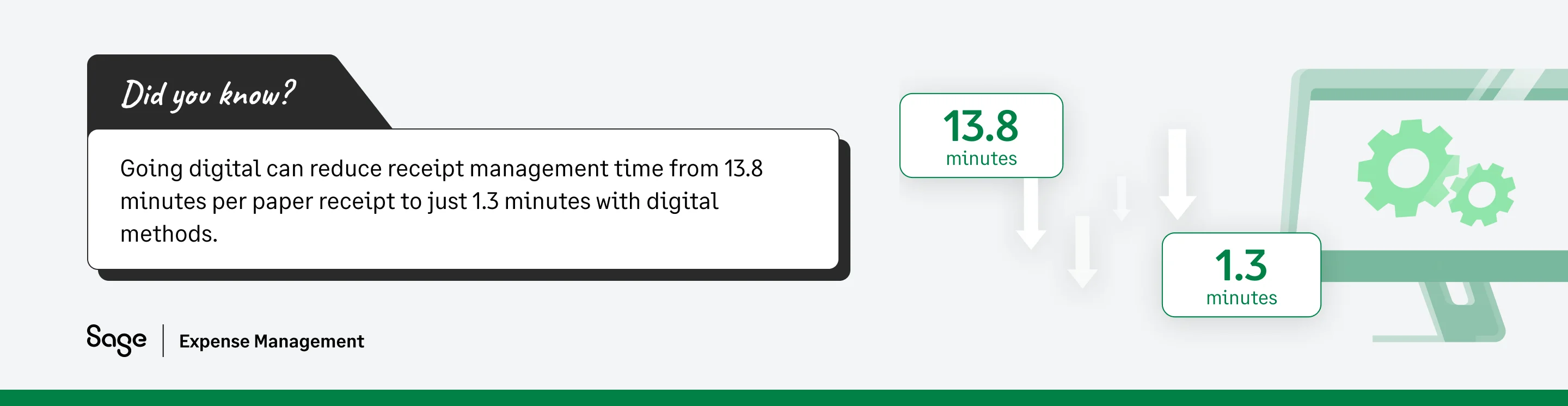
Digital documents provide a vital backup against loss or damage. To digitize, snap a photo with your smartphone and upload it to a dedicated cloud folder. This is especially helpful for hybrid teams where employees can’t hand in physical slips in person.
Also Read
3. Use a receipt tracker
The easiest and most reliable way to track receipts is by using a dedicated receipt tracker app or software.
Choosing the best receipt tracker for your business depends on the nature of your business and what you want to get out of your chosen tool. You can find one that also helps you track paper and online receipts and offers features like 24/7 live chat support.
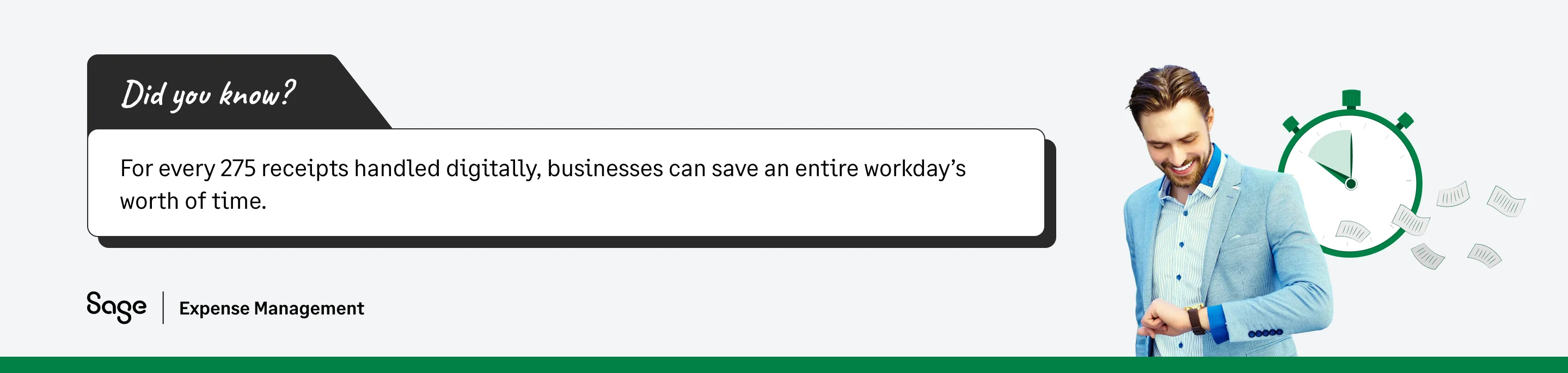
The Shared Card Struggle: Tracking Multiple Users
One of the biggest headaches for finance teams is managing shared corporate accounts.
- The visibility problem: It is common for a single business account (like a Capital One Spark card) to have 7 or more users. When the statement arrives at the end of the month, you’re left looking at dozens of mystery charges from multiple people.
- Real-time notifications: Waiting for the bank statement is too late to ask "Who bought this?". By then, the employee has forgotten the details or lost the receipt. You need a system that notifies you the moment a card is swiped.
- Identifying the strugglers: In almost every company, there are 2–3 employees who are notoriously bad at handing in documentation. Without a tracking system, you spend your entire month chasing these "strugglers" instead of analyzing your margins.
Employee Reimbursements vs. Corporate Card Spending
Managing two different spend tracks can lead to data silos:
- The two-track system: You have employees spending out-of-pocket (reimbursements) and others using company-issued plastic. A good management system must consolidate both into a single dashboard so you can see your total burn rate.
- Policy enforcement: To stay organized, set a No Receipt, No Pay rule. Ensure that receipts for out-of-pocket spend are submitted and approved before the reimbursement is processed.
The Dangers Of Ineffective Receipt Management
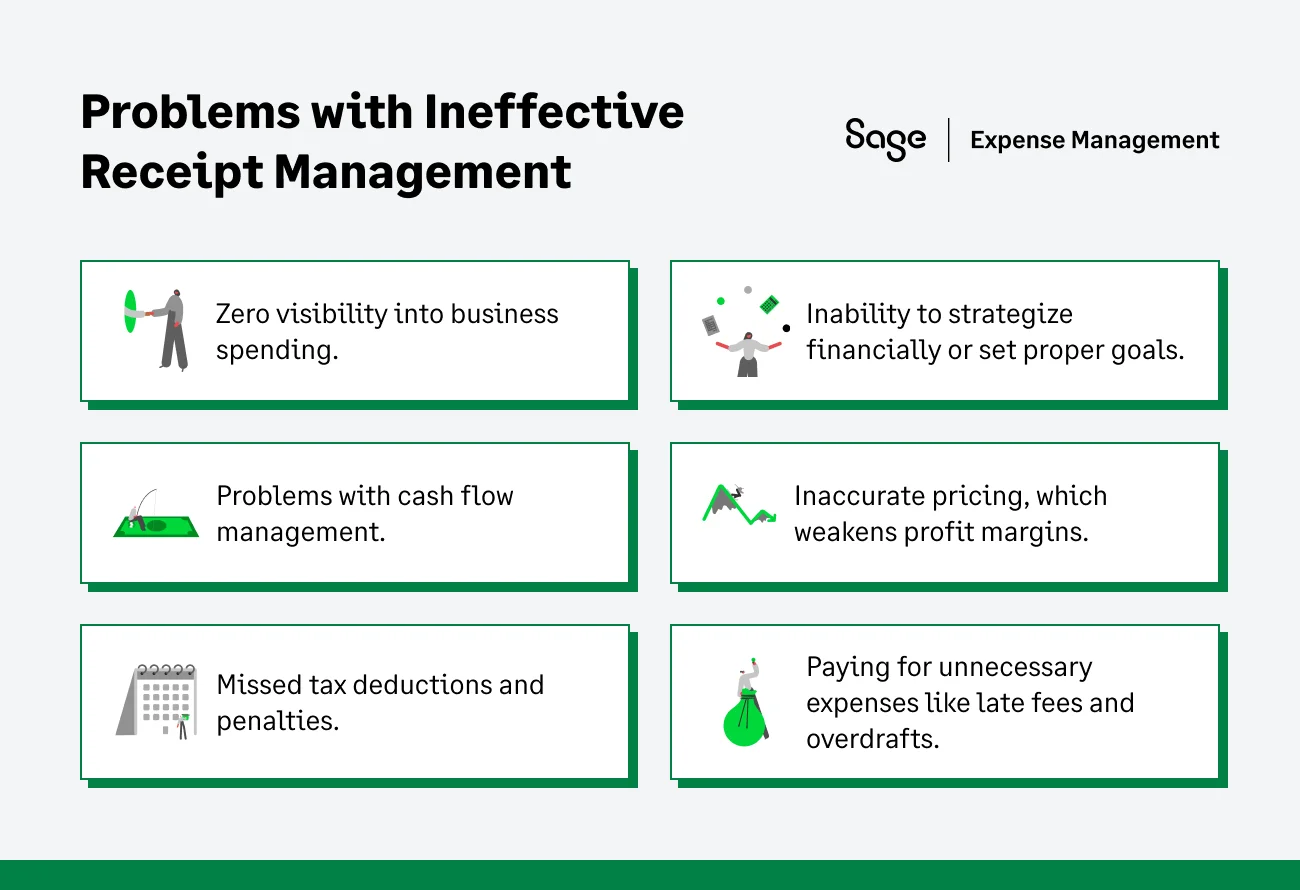
When your receipts are not in order, your books are also not in order. Ineffective receipt management can lead to significant financial and legal consequences.
- The financial blind spot: You can’t identify department costs or compare projected vs. actual income if you’re missing pieces of the puzzle.
- Inability to strategize: Without a clear picture, you can’t set realistic goals or monitor project milestones.
- Cash flow hurdles: Tracking payables properly allows you to foresee cash flow gaps before they happen.
- Pricing pitfalls: If you don’t know your true expenses, you risk underpricing your services and eroding your margins.
- Missed deductions: A disorganized system leads to "Disallowed Deductions" during audits, resulting in a much higher tax bill.
IRS Rules and FAQs around Record-Keeping for Businesses
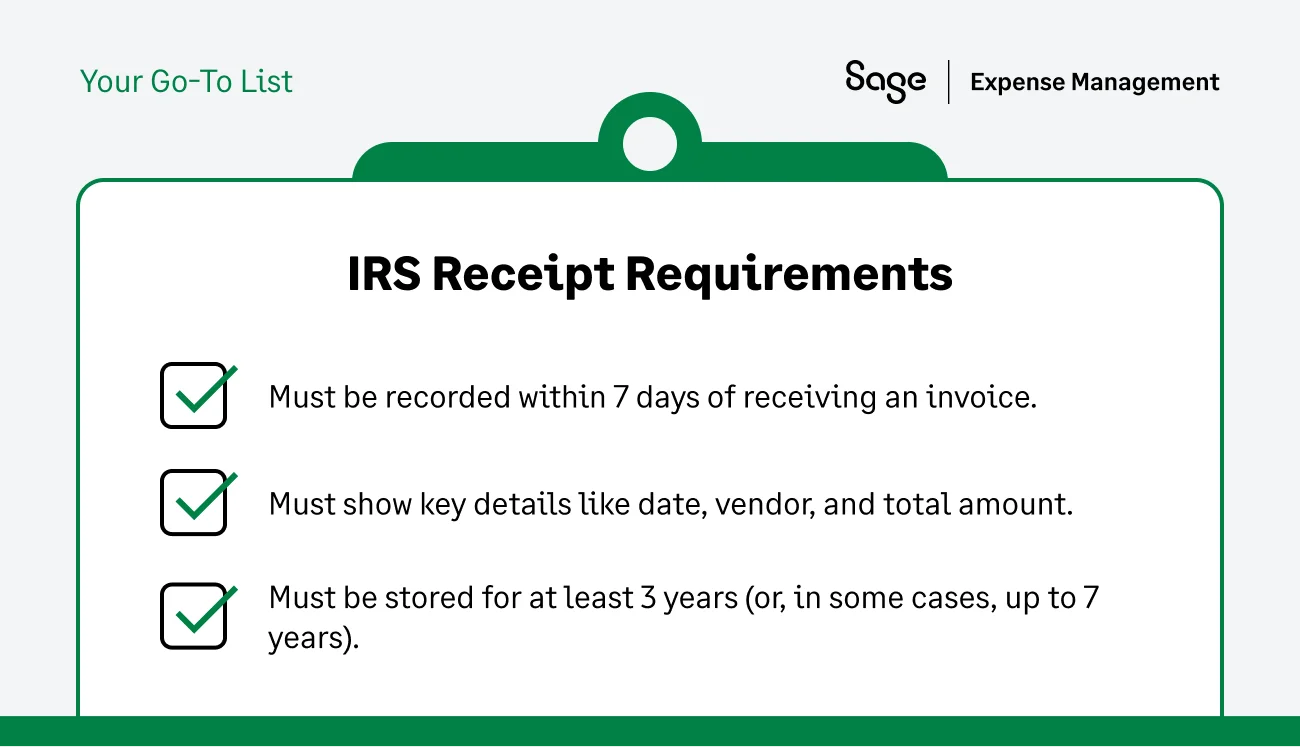
The IRS has a simple, yet crucial, rule: deductible expenses must be "ordinary and necessary" for your business.
An expense is "ordinary" if it's common and accepted in your industry. An expense is "necessary" if it is appropriate and helpful for your business operations.
Does the IRS require receipts for business expenses?
- The burden of proof: Yes. The IRS requires taxpayers to keep records to substantiate their deductions. This is your burden of proof in case of an audit.
- The $75 rule: However, the IRS has a de minimis rule where receipts are not needed for non-lodging expenses under $75. Even in this case, you must still provide a record of the expense's details (amount, date, place, business purpose).
Also Read
How long should I keep my business receipts for tax purposes?
- The 3-Year Rule: The general rule is to keep records for 3 years from the date you filed your tax return.
- Exceptions: Longer timeframes apply in specific cases, such as for claiming a loss from bad debt or worthless securities (7 years) or if you missed reporting more than 25% of your income (6 years).
Can a credit card statement serve as a receipt?
A statement is proof of payment, but it often lacks the detail required by the IRS, such as an itemized list of what was actually purchased.
Are digital receipts (e-receipts) or photos of receipts valid for the IRS?
Yes. The IRS has accepted digital receipts since 1997, provided they are clear, legible, and organized.
The secondary evidence rule
If you lose a vital receipt, you can sometimes use secondary evidence—like a bank statement combined with a calendar entry or a written statement—to reconstruct the expense.
Under the cohan rule, the IRS may allow reasonable estimates for some expenses, but they are notoriously strict and often disallow travel and meal estimates without a physical record.
How Do You Categorize Receipts For A Business?
Receipts should follow your Chart of Accounts—the systematic listing of all financial accounts in your general ledger.
- Five main account types: The chart of accounts is organized into five main types: assets, liabilities, equity, revenue, and expenses.
- Customization for your business: You can create subcategories like "Utilities," "Software Subscriptions," or "Marketing" under the broader "Expenses" umbrella.
- Consistency: Maintaining the same structure over time is the only way to get accurate year-over-year financial comparisons.
Setting up a receipt approval workflow
Organization isn't just about collecting paper; it’s about verification.
- The second pair of eyes: Every receipt should be reviewed by someone other than the person who spent the money to prevent fraud or "accidental" personal purchases.
- Automated policy checks: Modern software can automatically flag "out-of-policy" spend—like a $500 dinner or a flight upgrade—the moment it’s submitted, so Finance doesn't have to catch it manually.
The Easiest Way to Track Receipts for Businesses
The manual tracking of receipts, whether on paper or in a spreadsheet, is a significant time sink that is prone to human error.
The most reliable and efficient way to track receipts for a business is through a modern, automated solution like Sage Expense management.
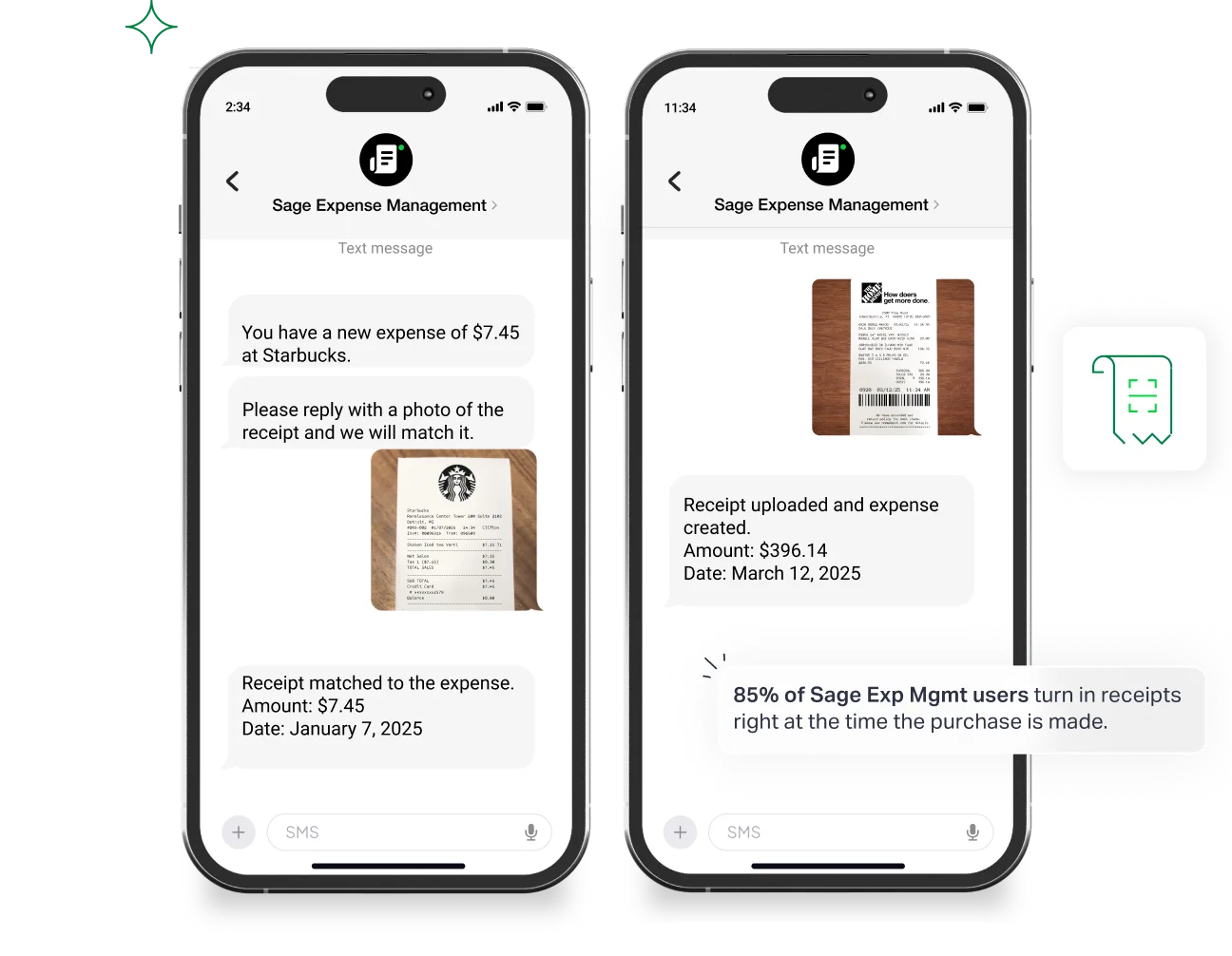
Sage Expense Management is the perfect solution for this. It automates the entire process, from tracking and capturing receipts to generating reports, with zero manual effort.
- Real-time capture: Sage Expense Management's conversational AI allows you to snap a picture of a receipt and send it in via text message. It then automatically extracts key data from the receipt, categorizes the expense, and creates a digital audit trail.
- Automated data extraction: It's AI automatically extracts key data from receipts, categorizes the expense, and creates a digital audit trail.
- Seamless integration: Sage Expense Management syncs all receipt data with your accounting software, automating reconciliation and providing real-time visibility into all your expenses.
In Conclusion
Good bookkeeping can often be one of the major reasons why any business sustains against its competition. Receipts provide a host of information for your business and can serve as one of your barometers for growth while also helping you with pricing.
Additionally, being organized will also help you save a lot of time and money in the long run, as you’re always aware of how much you spent, when you spent it, and where it was spent.
By embracing a modern, automated solution, businesses can transform receipt management from a daunting chore into a streamlined process that saves time, maximizes tax deductions, and provides the financial clarity needed for growth.
If you’re ready to ditch the paper chase and gain complete control over your business receipts, schedule a Sage Expense Management demo today.
{{chasing-receipts="/cta-banners"}}